_FBlogo_red.png)



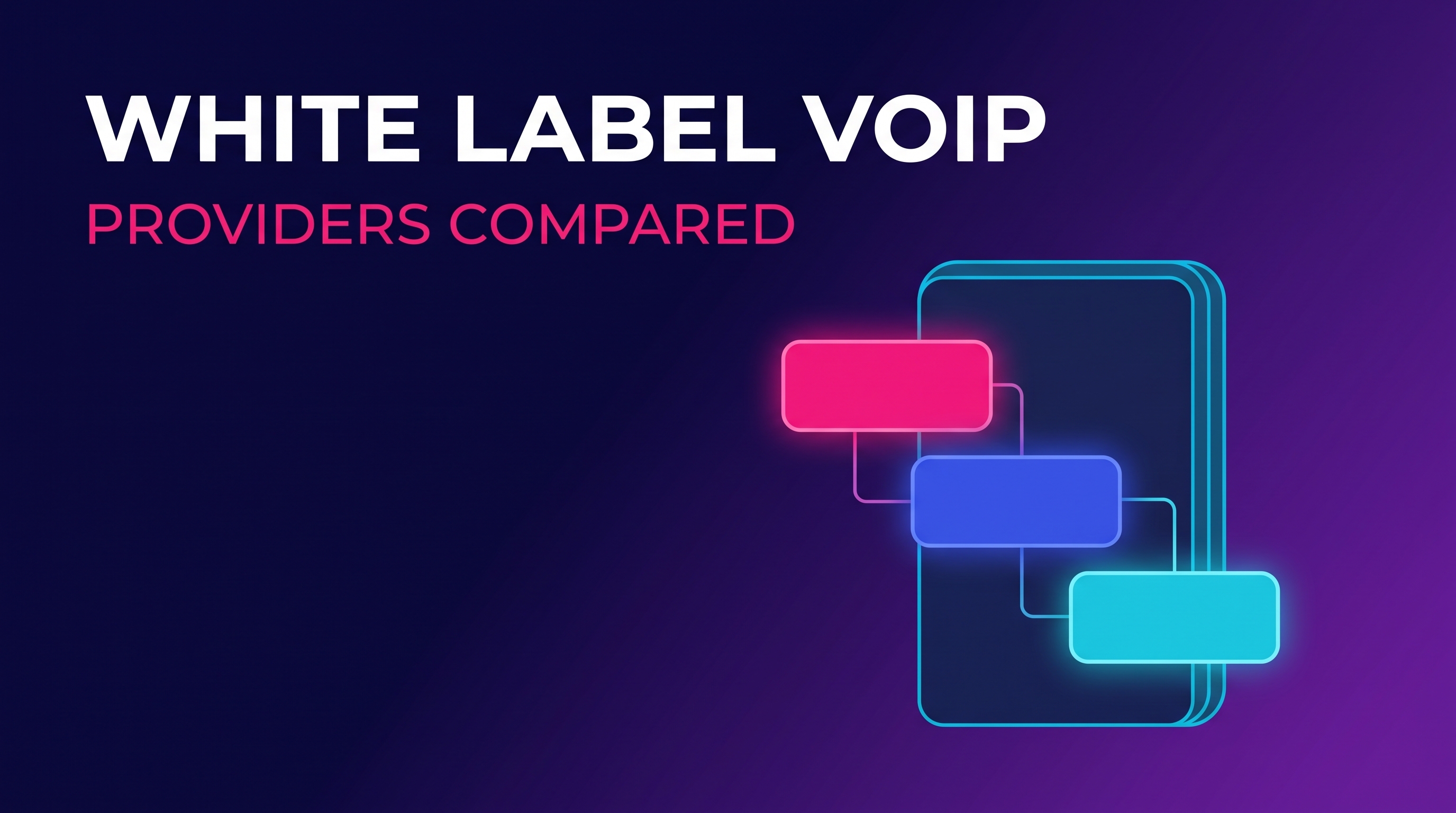
Sell VoIP and you hit the same fork every MSP does: build the telecom company or rent the one already built. Wholesale VoIP hands you carrier-rate capacity and asks you to take on the role of telecom operator, which means you do your own billing, tax compliance, and switching. White label hands you all of that already running, with your brand on the front of it.
But the fork in the road doesn't end there. MSPs choosing white label must decide between different white-label platforms. Many MSPs use call quality to compare platforms, but this is a non-differentiator because most white-label platforms barely differ in this area. What actually separates these platforms is the operational layers MSPs almost never compare before buying: billing, telecom tax, the support model, and what happens when you want to end your contract.
Learn how to select the best white-label platform for your MSP, so you don't find yourself, eight months later, buried in a billing engine you have to hand-rate, dealing with a tax bill nobody remitted, or stuck in a contract that won't let you leave.
White Label Is Not the Same as Wholesale
"Wholesale" and "white label" get used interchangeably, but they're different purchases. Wholesale means buying capacity — trunks and minutes at carrier rates — and building the platform, billing, provisioning, and compliance yourself. White label means buying all of that already built, with your brand on top.
-
Wholesale: you buy capacity (trunks/minutes at carrier rates) only. The operating layer — platform, billing, provisioning, compliance — is left for you to build and run.
-
White label: you buy capacity and the operating layer bundled together. The vendor builds and runs the platform, billing, provisioning, and compliance; you just put your brand on it.
To learn more about wholesale, read wholesale VoIP providers and wholesale versus retail SIP trunking.
What Actually Separates White Label Platforms
Call quality is a given here — every platform clears that bar. The real differences don't show up in a demo. They show up after eight months, in the six places below.
| Dimension | What to look for | Why it's important |
|---|---|---|
| Billing engine | Is usage rating/invoicing done for you, or do you do it? | Without it you have to rate call records by hand every month, and that's where margin quietly leaks. |
| Telecom tax | Does the platform calculate it, remit it, both, or neither? | Calculation and remittance are different services. Assuming both are covered is a common and expensive error. |
| Support model | Is support run by you, the vendor, or white-labeled as yours? | Determines your headcount and whose reputation takes the hit in an outage. |
| Provisioning | How fast from signed order to working dial tone? | Onboarding speed is what your salespeople can actually promise. |
| Contract and exit | What's the commitment, and can you actually export your data? | Numbers, rate cards, and customer records are the assets. Ask before signing, not after. |
| Brand control | Does the vendor's name show up anywhere the customer might see it (portal, invoice, app)? | If it does, it's not really white label. |
Overview of Providers
These providers are grouped by model, not ranked, because the right pick for you depends on what your business needs. The information below reflects each provider's own public positioning, and is not a substitute for your own demo.
Channel-Built Platforms
RingLogix, SkySwitch, and Viirtue sell a white label UCaaS platform to resellers and MSPs, each with its own partner ecosystem. Reinvent Telecom and White Label Communications go further, keeping more of the operational load on their side. All five suit an MSP who wants the platform, billing, and compliance bundled into one purchase.
Carrier and Marketplace Routes
voip.ms and similar carriers sell termination and numbers, not a branded platform. They show up in white label searches because resellers use them to assemble their own stack. Cheapest per minute, but you own everything else: billing, E911, and the rest.
Self-Hosted Platform Software
Yeastar sells platform software to ITSPs and service providers who want to run their own infrastructure. This is a different trade: more control, more responsibility, and a real operations team to back it up.
Questions to Ask Before You Sign
-
Does the platform calculate telecom tax, remit it, or neither? Get the answer in writing rather than in a demo.
-
Whose brand does the end customer see on the portal, the mobile app, and the invoice?
-
When a customer calls with a problem, who answers, and is that person answering as you?
-
What is the realistic time from signed order to working service for a twenty-seat customer?
-
What can I export if I leave, in what format, and do I keep the numbers?
-
Is there a minimum commitment, and does it ratchet up on renewal?
-
Which parts of the margin structure are fixed and which are mine to set?
The third question is the one that separates genuinely white-labeled platforms from resold ones. Ask it directly.
The Right Fit
Switching platforms sounds simple, but it rarely is. Numbers have to be ported, customers have to be re-provisioned, and you're the one doing the work, not the vendor you're leaving.
That's why exit terms matter more than the demo. A platform with slightly better features and no way out is still the worse purchase.
Before you compare vendors, decide what you actually want to own. If it's just sales and support, a channel platform fits, and the real comparison is billing, tax, and exit terms. Contact the RingLogix partner program to see how the platform, billing, and telecom tax come packaged together.
Frequently asked questions
What is white label VoIP?
A phone service built and operated by one company but sold under another company's brand. The reseller sets pricing, owns the customer relationship and invoices directly, while the provider runs the platform behind it.
Can I be my own VoIP provider?
Yes, and there are three routes with very different demands. Reselling white label means the platform is run for you. Buying wholesale capacity means you build the platform, billing, and compliance yourself. Becoming a facilities-based carrier is a different undertaking again. Most MSPs choose the first because the second consumes the margin it was meant to create.
How much does it cost to white label a VoIP platform?
Pricing in this category is quoted rather than published, and it usually combines a per-seat or per-user rate with usage. Any single figure quoted publicly is an example, not a price. Compare the total of platform fee, usage, number charges, and whether telecom tax is included, because those move the real number more than the headline rate.
What is the difference between white label VoIP and a VoIP reseller program?
Language varies by vendor, which is why this confuses people. In an agent or referral program you introduce the customer and receive commission while the vendor owns the relationship. In white label you own the customer, the pricing, and the invoice. Check which one a program actually is, because both get marketed with the same words.
Do I need my own infrastructure for white label VoIP?
No. That is the point of the model. You need sales, onboarding, and first-line support. If a provider expects you to supply session border controllers or your own switching, you are looking at a wholesale arrangement described in white label language.
How do I choose a white label VoIP provider?
Compare on billing, telecom tax responsibility, support model, provisioning speed, and exit terms rather than on the feature list, since features converge across the category. Run a demo with a real twenty-seat scenario including a mid-cycle change and a port, because that is where the differences surface.