_FBlogo_red.png)



For a long time, voice has been trending in one direction.
Down.
Call volumes have declined, margins have tightened, and competition has increased. At the same time, alternative communication channels have taken over a significant portion of customer interaction. Chat, SMS, portals, and ticketing systems have all reduced the need for traditional voice conversations.
In many cases, customers have even developed a preference for avoiding voice altogether. The result is that voice, which once sat at the center of communication, became increasingly commoditized.
But Voice AI is creating new revenue opportunities by transforming voice from a low-margin commodity into a high-value service that drives real business outcomes.
Key Takeaways
-
Voice has been declining due to the rise of alternative communication channels.
-
Voice AI introduces a new type of interaction — one that is outcome-driven rather than purely communicative.
-
This shift changes how value is defined, creating opportunities for higher-margin services and more meaningful customer engagement.
🎥 Clip: Voice Industry Decline + Bringing Voice Back
What’s Different About Voice AI
Voice AI doesn’t attempt to reverse that trend by forcing people back into old behaviors. Instead, it changes the nature of the interaction itself.
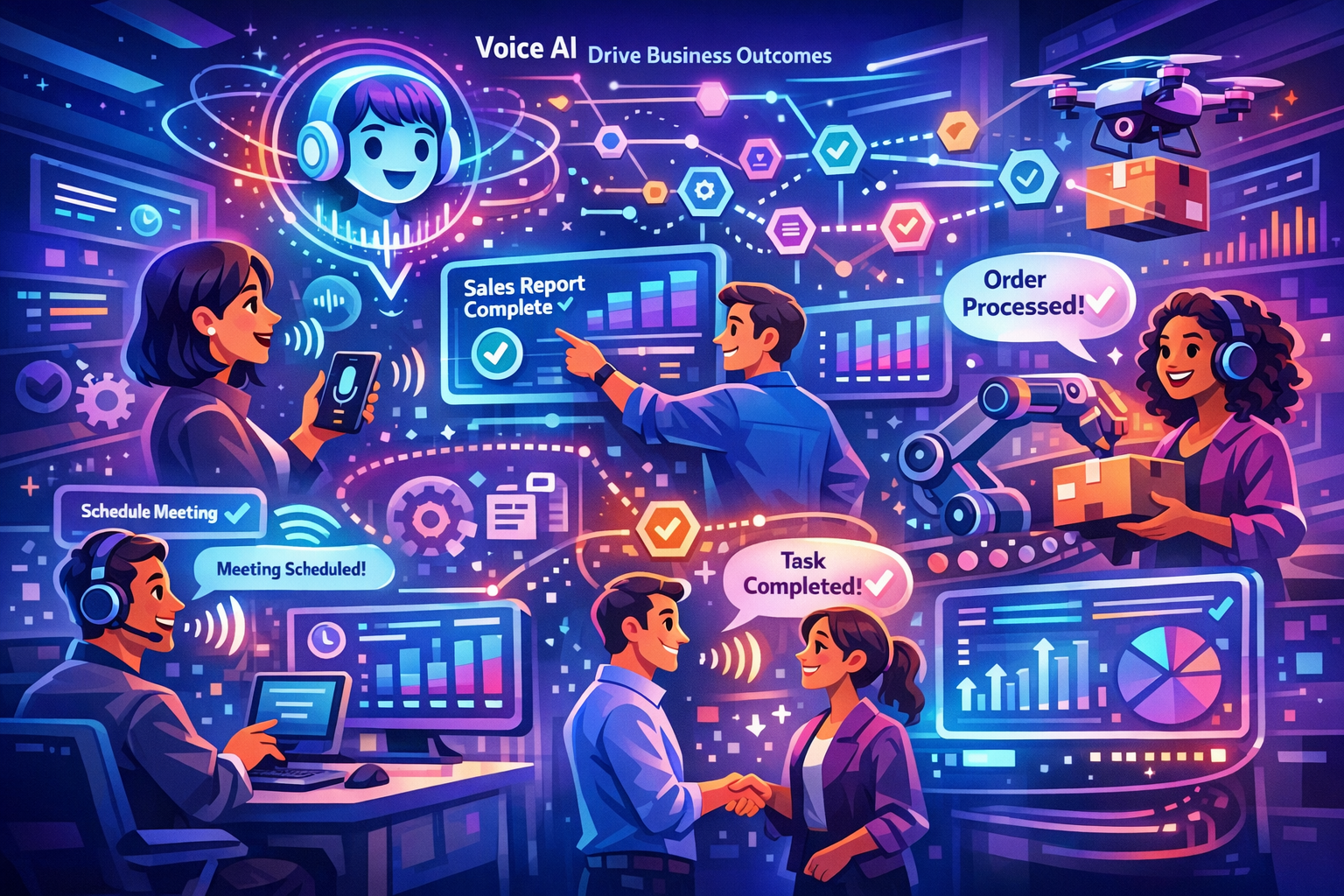
Rather than acting as a simple communication channel, voice becomes a mechanism for execution. Conversations are no longer just exchanges of information — they are opportunities to complete tasks in real time.
An interaction can begin with a simple question and end with a resolved issue, a scheduled appointment, or a qualified lead, all within the same flow.
🎥 Clip: Voice AI Use Cases
Why This Changes the Economics
For years, traditional voice has been priced around access. At its core, you’re paying for the ability to connect — minutes, seats, lines. The value is tied to infrastructure and availability, not necessarily what happens during the interaction. Whether a call results in anything meaningful is largely outside the scope of what’s being sold.
Voice AI changes that completely.
Now the value isn’t in the connection itself — it’s in what the interaction actually accomplishes. The call isn’t just a conversation. It’s an outcome. A question gets answered immediately. A lead gets qualified and routed. A ticket gets created and enriched with context. An appointment gets booked without any human involvement.
That shift — from enabling communication to executing tasks — is what fundamentally changes the economics.
Because when you’re delivering outcomes instead of access, the conversation around pricing changes as well. You’re no longer competing on cost per seat or cost per minute. You’re aligning with the value created on the other side of the interaction.
And that’s why these interactions command higher value. They’re not just minutes moving across a network. They’re actions that save time, reduce workload, and directly impact the customer’s business.
The Return of Voice (But Different)
One of the more interesting outcomes of this shift is that it brings voice usage back — but in a different form.
These are not the same types of interactions that defined voice in the past. They are more purposeful, more efficient, and more tightly connected to business outcomes. As a result, they carry more weight and more value.
This creates an opportunity for service providers to move beyond commodity pricing and into a model that reflects the impact being delivered.
How Providers Should Think About This
For providers, this shift requires a change in how voice is positioned.
Continuing to sell voice in terms of lines, seats, or minutes keeps the conversation anchored in a commoditized framework. But repositioning around automation, efficiency, and outcomes opens up a very different discussion — one that is aligned with the actual value being created.
This is where differentiation starts to emerge.
🎥 See the Full Strategy in Action
This perspective comes from our full webinar, where we walk through real-world use cases, partner strategies, and how this translates into revenue.
👉 Watch the full webinar
👉 Learn more about RingLogix Agent Studio