
Remote selling works best for VoIP resellers when the buyer can see a clear connection between their phone-service problems, the proposed solution and the implementation plan. Use a focused discovery call, a relevant demonstration and a written next step. Keep technical questions open until someone qualified has verified them.
Key takeaways
- Discover call-handling needs and buying responsibilities before presenting features.
- Demonstrate the customer's priority workflow rather than every feature in the platform.
- Keep the quote, implementation scope and billing expectations consistent.
- Remote selling does not remove the need to verify devices, network readiness, number porting and service limitations.
Prepare for a conversation, not a pitch
Review the prospect's public website and any information they have chosen to share. Identify their locations, business hours and likely caller journeys. Treat these as starting points, not verified operational facts. Ask the prospect to correct your assumptions early.
Confirm who uses the phone system, who manages it, who approves the purchase and who will coordinate deployment. These may be different people. A conversation with one enthusiastic user is not the same as agreement on budget or implementation.
Ask questions that reveal the call workflow
Start with one recent example of a call that did not go as intended. Ask what happened, who was affected and what the team did next. Then expand the discussion with questions such as:
- Where should a new customer call go during business hours and after hours?
- What happens when the first person or team does not answer?
- Which employees work remotely, and which devices do they use?
- Which phone numbers must stay, and who can authorize a port?
- Which business applications are involved, and what exact action must an integration perform?
- What would make the change successful for the people answering calls?
A reported dropped call or audio issue is a symptom, not a diagnosis. Do not promise that switching providers will fix it without evaluating the relevant network, device and service conditions.
Show one complete customer scenario
A useful remote demonstration follows the caller's path. For a hypothetical two-location service company, show how a customer reaches the right team, what happens when nobody answers and how an employee returns the call. Label sample accounts and data clearly so the buyer does not mistake them for customer evidence.
RingLogix Hosted PBX describes mobile, desktop and browser calling options. Select the relevant option for the buyer's situation and confirm device, configuration and feature requirements. Do not imply that every integration or workflow is included just because the platform supports integrations.
Pause after the scenario. Ask the buyer to explain what would work for their team and what is still missing. Capture unresolved requirements with an owner and a next step rather than improvising a product promise.
Use a shared meeting plan
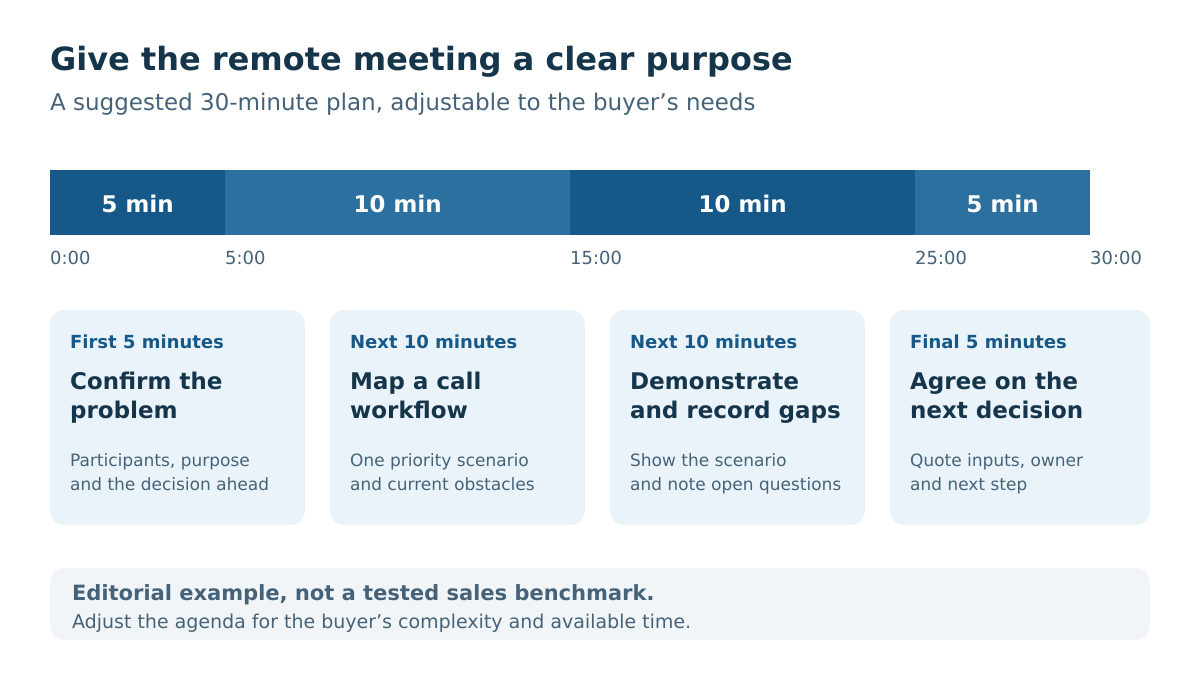
This suggested 30-minute structure is an editorial example, not a tested sales benchmark. Adjust it to the buyer's complexity and available time.
- First 5 minutes: Confirm participants, the business problem and the decision the meeting should advance.
- Next 10 minutes: Map one priority call workflow and the current obstacles.
- Next 10 minutes: Demonstrate the relevant scenario and document gaps.
- Final 5 minutes: Agree on the information needed for a quote, the review owner and the next meeting or decision.
Make the session usable without relying on tiny screenshots. Explain what you are showing, share readable written requirements and use captions when available. Get permission before recording and follow the applicable consent requirements.
Turn discovery into a reviewable quote
Summarize the agreed user count, services, devices, numbers and calling assumptions before sending a price. Separate recurring and one-time charges, clarify exclusions and identify dependencies that could affect the start date.
RingLogix Quote and Activate describes guided quoting and customer acceptance. The RingOS quoting support guide documents prospect details, service and billing entries, one-time charges, review and email delivery, followed by account activation after the order. Verify the offer before sending it; a guided process does not eliminate input errors.
Make the post-sale handoff part of the sale
Before promising a launch date, confirm who owns number porting, device readiness, network checks, emergency-calling configuration, user training and acceptance testing. Identify when an on-site visit or technical specialist is needed. Selling remotely does not mean every installation can be completed remotely.
Explain how the first invoice and ongoing support will work. RingLogix's billing and revenue management platform describes automated invoices and payment integrations. Its RingLogix billing-engine overview explains that card processing requires a credit-card integration and that auto-pay depends on the relevant setup. Do not promise automatic payment collection before confirming those prerequisites.
Plan a customer-focused RingLogix demo
Bring one representative customer workflow and your unanswered requirements to a demo. Use it to assess fit, identify technical checks and build a clear next step for the buyer.

Frequently asked questions
Can an MSP sell VoIP without an on-site sales visit?
Yes, discovery, demonstrations and quote review can take place remotely. Technical assessment or installation may still require an on-site visit.
What should a remote VoIP demo cover?
Show the buyer's priority call scenario, including its exception or fallback path. Confirm which requirements are demonstrated and which still need verification.
Should I promise a porting date during the sales call?
Only communicate a date supported by the relevant porting process and confirmations. Collect requirements first and explain dependencies rather than assuming immediate transfer.
How can I build trust without meeting in person?
Make the scope, costs, limitations and responsibilities clear. Answer verified questions directly and give unresolved questions an owner and follow-up date.
What should happen after the customer accepts?
Confirm the accepted scope, implementation owner, readiness checks, training and billing expectations. Treat account activation and a completed, tested deployment as separate milestones.