_FBlogo_red.png)



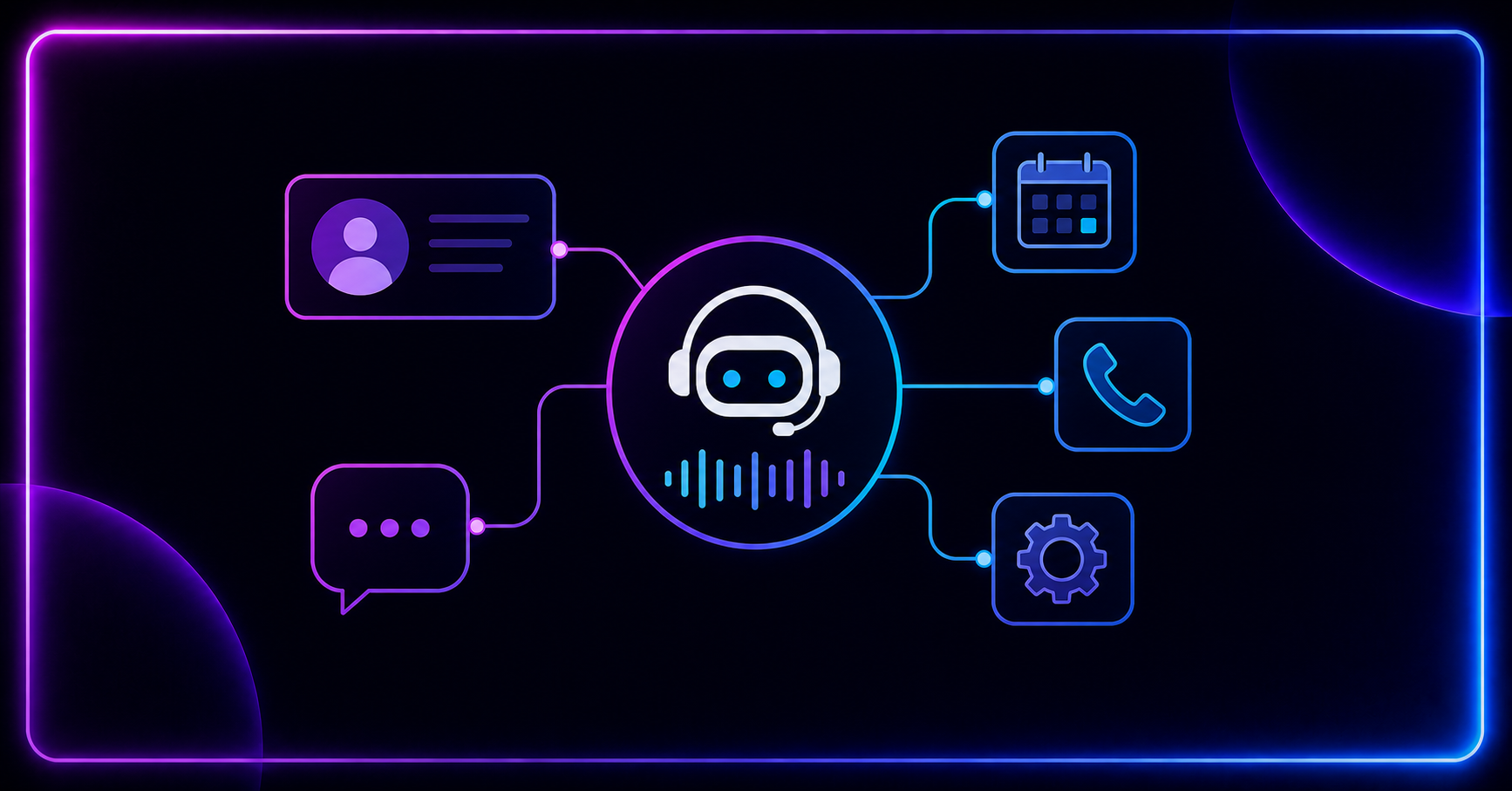
We’ve built the next evolution in white-label AI voice, RingLogix Agent Studio: one platform for building, connecting, deploying, managing, and selling AI voice agents.
Here's what it could look like in your MSP. A customer calls after hours about a broken printer. Instead of leaving a voicemail, the agent identifies the caller, checks their account, sees there's no open ticket, creates one with the right details, and routes it to the right queue. When the technician picks it up in the morning, the work is already documented and moving. Your technicians start the day working the issue, not chasing details.
That's the shift most AI voice tools haven't made yet: going from just holding a conversation to turning that conversation into a completed action inside the systems a business already runs on.
As an MSP, you already live inside PSAs, CRMs, ticketing systems, and workflows — that's how work actually gets tracked and done. RingLogix Agent Studio was built to connect agents directly into those systems, so agents can turn calls into completed tasks by creating tickets, updating records, or triggering follow-ups automatically.
Build it once, brand it, and sell it to your customers as a repeatable service, or run it inside your own MSP to keep routine, repetitive work off your team's plate. Either way, you manage every deployment from one platform, with real activity and outcomes to show customers.
Key Takeaways
-
Agent Studio is one platform for building, connecting, testing, deploying, and managing AI voice agents
-
MSPs can use it to improve their own service desk, sales, or after-hours calls
-
MSPs can also brand it, sell it, and support it as a customer service
-
One-click integrations reduce the need for custom development
-
All-in pricing means no surprise costs eating into your margin
-
Browser control lets an agent talk to a website visitor while navigating the page
-
Live testing, call monitoring, and analytics help you manage performance and prove value
What Agent Studio Actually Is
Agent Studio is the future of AI voice agent for MSPs. It makes advanced AI voice agents easier to build, connect, test, deploy, and manage without turning every agent into a custom development project.
Under the hood, it's speech-native and PBX-native. Audio goes straight into the model, each call gets dedicated infrastructure, and agents pull answers from a customer's actual documents instead of a generic script.
Agent Studio brings the whole process under one roof:
-
Agent creation
-
Prompt and behavior configuration
-
Knowledge — the documents and data the agent pulls answers from
-
Tools and integrations
-
Testing — validating behavior before any agent takes a live call
-
Deployment
-
Call visibility — reviewing how calls actually went, per agent
-
Customer management — keeping every customer's agents and settings organized in one platform
With Agent Studio, you're not starting from scratch in building your AI voice agent. Industry and workflow templates give you a proven starting point, and structured prompts keep every agent's behavior predictable and on-brief — call after call, customer after customer. Every agent gets tested before it ever handles a live call, and nothing changes in production until you hit deploy.
What Agent Studio Can Do
Once an agent is connected to your systems, it isn't limited to answering questions. Depending on the workflow, it can:
-
Identify the caller and match them to the correct account
-
Check for an existing ticket or open request
-
Collect the details needed for a new ticket
-
Create or update a record
-
Schedule, confirm, or reschedule an appointment
-
Route the request to the right team
-
Trigger a workflow in a connected system
All of this is possible because of Agent Studio's one-click integrations that connect agents to the tools MSPs already run their service desks on. So there’s no API knowledge or custom middleware required.
Agent Studio’s browser control adds another layer. An agent can talk to a website visitor while navigating the page, scrolling to relevant content and highlighting what it's referencing. That's a different experience than a chat bot, and it's one of the easiest ways to show a customer what the platform can do before they buy it.
None of this depends on a client's IT team learning AI prompting, and none of it depends on you hiring a developer to maintain it.
Keep It In-House. Or Take It to Market.
Some partners will run Agent Studio inside their own service desk, using it to handle the after-hours calls and repetitive triage that eat up technician time. Some will turn it into a new revenue line, building and branding agents to sell straight to customers. Many will do both at once — running their own deployment while packaging the same platform as a product. Agent Studio doesn't force the choice; it's built to support either path, or both, from day one.
For your own service desk: an agent can answer after-hours and overflow calls, collect service-request details, check ticket status, save your technicians time by handling repetitive, Tier-1 work, and provide your team with context before they pick up a request.
For your customers: you canbuild, brand, deploy, and manage AI voice agents as a standalone service, an add-on to UCaaS, or part of a broader managed services agreement. The client sees your brand. You keep the relationship, the margin, and the renewal.
Neither path requires you to become a software company first.
No Hidden Costs
A lot of AI voice platforms advertise a low starting rate.
That rate rarely covers what it actually costs to run an agent. Language model usage, speech-to-text, text-to-speech, and telephony often get billed separately — each from a different vendor, each with its own usage-based pricing — and those charges add up fast once an agent is live and taking real call volume.
For an MSP, this isn't just an accounting annoyance. If you're reselling the platform, a quote built on the sticker price instead of the real cost means you're eating the difference every month, or worse, going back to a customer to explain a price increase after the contract is signed. If you're running it internally, an underestimated cost is a budget line that keeps creeping instead of staying fixed.
Agent Studio's pricing is all-in. You see the real cost upfront, which means you know your margin before you quote a customer, not after the first invoice.
That matters whether you're pricing a customer service or budgeting for your own internal use — either way, the number you plan around is the number you actually pay.
Simple to Launch, Simple to Prove
You don't need a complex, multi-department deployment to get started. One focused use case is enough to launch, and picking just one is what makes the whole process fast and low-risk. A single agent can cover:
-
After-hours answering
-
Ticket-status checks
-
Appointment scheduling
-
Basic call routing
-
Frequently asked questions
Because the scope is narrow, setup stays simple: less to configure, less to test, less that can go wrong before you go live. You can test the agent against real scenarios before it ever touches a live call, and nothing changes in production until you deploy it. Once it's live, call monitoring and analytics show you what's working, so you always know what the agent is actually doing.
Once that first use case is running well, expanding into more departments or more advanced workflows is a next step — not a rebuild.
Build a Business, Not a One-Off Project
A single agent for a single customer isn't a business — it's a project. Turning AI voice into a real revenue line means running it across many accounts at once, all under your brand, and proving it's worth paying for at every single one, not just the first customer you signed. Once that first use case is running well, expanding into more departments or more advanced workflows is a next step — not a rebuild.
Agent Studio is built to support that scale. Instead of rebuilding an agent from scratch for every new customer, you're deploying a repeatable, white-label service: the same platform and the same process, applied consistently across your whole customer base.
There's more depth ahead for partners who want it. Structured conversation flows and Playbooks are coming soon, giving experienced partners a way to build more controlled, multi-step agent experiences as customer needs grow more complex.
The core idea: one agent is a proof of concept; a repeatable process across many customers is the actual business.
See RingLogix Agent Studio in Action
Skip the generic demo. We'd rather show you how this works with a real workflow of yours.
Bring us a service-desk call, an internal process, or a customer opportunity you're trying to solve for. We'll walk through how Agent Studio fits, without turning it into some custom dev project.
Frequently Asked Questions
What is RingLogix Agent Studio?
Agent Studio is RingLogix's AI voice agent platform for MSPs. It's one platform for building, connecting, testing, deploying, and managing AI voice agents, whether they're used internally or sold to customers.
Can MSPs use Agent Studio for their own service desk?
Yes. MSPs can use Agent Studio to answer after-hours and overflow calls, collect service-request details, check ticket status, and give technicians cleaner context before they take over.
Can MSPs sell Agent Studio to their customers?
Yes. Agent Studio is white label, so partners can build, brand, deploy, and manage AI voice agents for customers as a standalone service, an add-on, or part of a managed services agreement.
Does Agent Studio require a developer to set up?
No. One-click integrations and prebuilt tools are designed to reduce the need for API knowledge or custom development for supported connections.
How does Agent Studio's pricing work?
Agent Studio uses all-in pricing that includes the language model, speech-to-text, text-to-speech, and telephony costs, so partners can see their real margin upfront instead of discovering hidden charges later.
What is browser control in Agent Studio?
Browser control lets an agent speak with a website visitor while navigating the page, scrolling to relevant content, and highlighting information as it talks.
How should an MSP evaluate an AI voice platform?
Look at whether it connects to your existing systems, reduces manual intake, supports both internal and customer-facing use cases, and can be deployed repeatedly without a custom project every time.